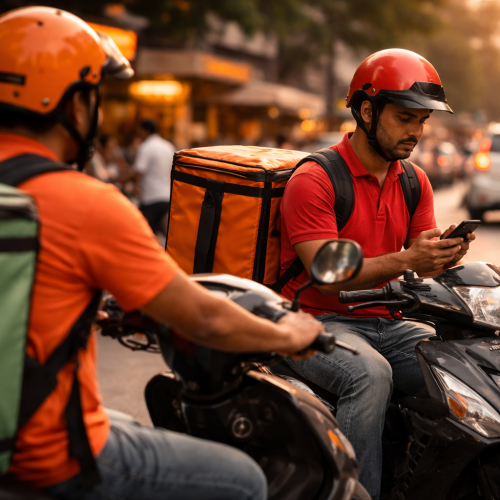
India’s 10 minute delivery culture has changed how we experience convenience. In the last few years, India has entered a new kind of rush — one where groceries, snacks, medicines, and forgotten midnight cravings arrive at our doorstep in just ten minutes.
It feels almost magical.
A promise of speed.
A promise of convenience.
A promise that the world will move faster so we don’t have to.
But behind this promise, there’s a story we often forget to notice.
Because while our orders reach us in ten minutes, someone else is racing against traffic, deadlines, heat, rain, exhaustion, and fear to make it happen.
When Convenience Becomes Pressure
We’ve grown used to tapping a button and watching a timer begin its countdown. Ten minutes feels small to us — almost insignificant.
But that timer doesn’t tick in isolation.
It follows a delivery partner through crowded roads, narrow lanes, impatient horns, unpredictable weather, and constant pressure to not be late. It decides their ratings. Their incentives. Sometimes, their safety. This 10 minute delivery culture quietly shifts pressure onto those who make convenience possible.
The app shows us progress bars and cheerful notifications.
It doesn’t show us the skipped meals.
The anxiety of penalties.
The fear of accidents.
The exhaustion of chasing impossible expectations.
Somewhere along the way, convenience quietly turned into pressure — and the cost of that pressure has been carried by people we barely see.

The Human Cost of 10 Minute Delivery Culture
Every system that promises speed needs someone to absorb the stress of it.
In the case of 10-minute delivery, that someone is the delivery worker.
They navigate cities that rarely slow down.
They work through heatwaves, rains, and long shifts.
They are expected to outrun time — again and again.
And yet, most of us meet them with silence. Or impatience. Or indifference.
The reel that inspired this blog captured that contrast painfully well — how easy it is to enjoy convenience without acknowledging the human effort behind it.
When the Conversation Reached the Government
What’s interesting is that this concern has now moved beyond conversations and reels — it has reached the highest levels of governance.
In January 2026, India’s Ministry of Labour and Employment asked major quick-commerce companies such as Swiggy Instamart, Blinkit, Zepto, and Flipkart to stop advertising rigid “10-minute delivery” promises.
The move came after growing concerns about worker safety, rising pressure on gig workers, and the risks associated with extreme delivery timelines. Gig worker unions welcomed the decision, saying that removing aggressive time-based branding could help reduce unsafe expectations placed on riders.
Many platforms have since dropped the “10-minute” language from their marketing — a small but meaningful acknowledgment that speed should not come at the cost of human lives and well-being.
While the pace of deliveries may not have disappeared overnight, the shift in messaging signals something important: society is starting to recognize that convenience should have limits.
A Small Pause Can Change Everything
This isn’t a call to stop using delivery apps.
It’s a call to pause.
To remember that behind every “Order Delivered” notification is a human being who made it possible.
Maybe we can:
- choose a non-urgent delivery option when available
- step outside to collect the order instead of making them wait
- speak kindly instead of impatiently
- tip when we can
- remember that safety matters more than speed
Small choices don’t slow the system — they humanize it.
Maybe the Real Delivery Is a Reminder
The real issue isn’t ten minutes.
It’s what we’re willing to trade for it.
Because just because something arrives fast doesn’t mean it took little effort. Someone else carried the weight of that urgency for us.
And maybe the most important thing this culture needs isn’t faster delivery — but deeper awareness.
Under a little blue moon,
we can choose to be the kind of people
who slow down, notice, and care —
even in a world that keeps racing ahead.