
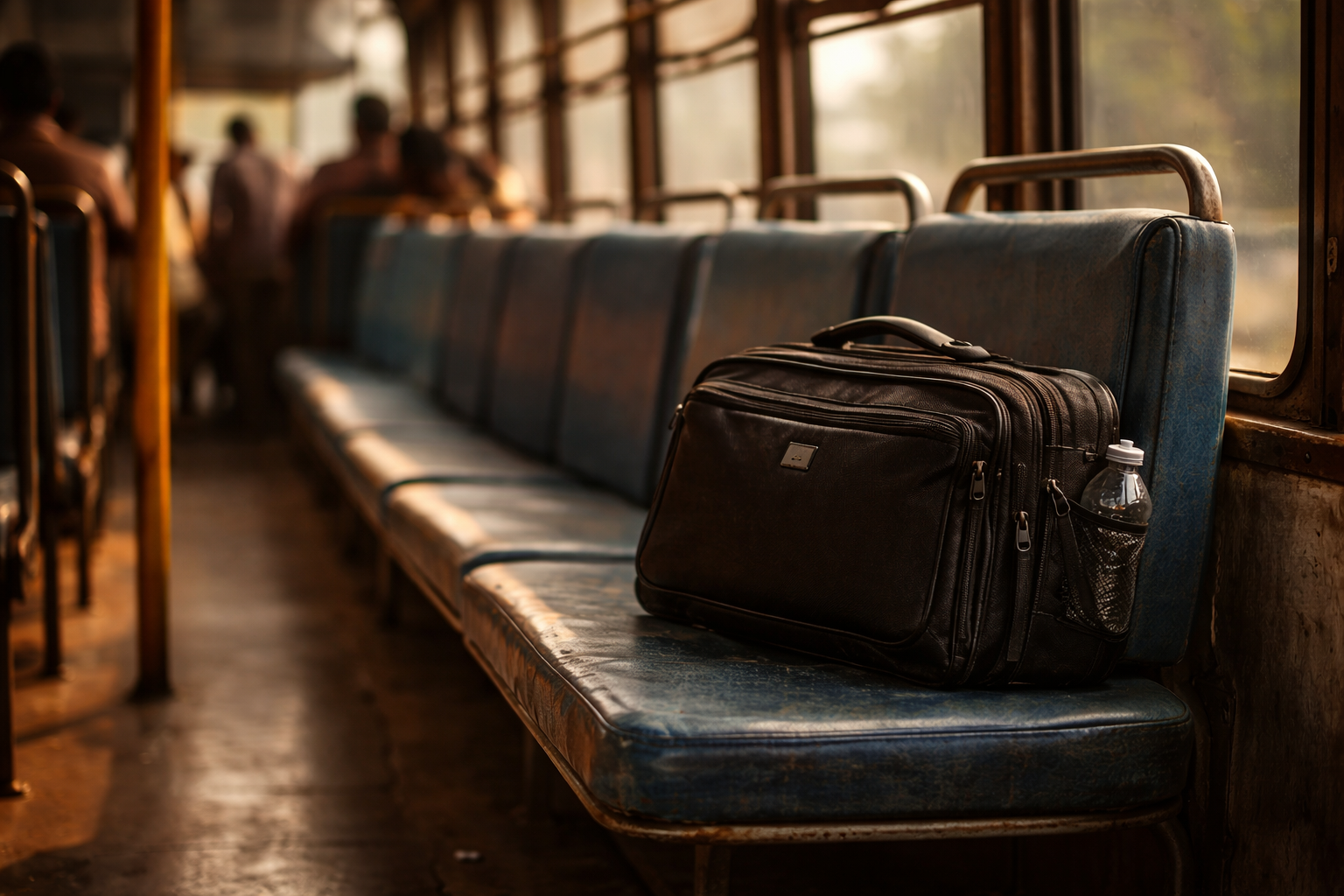
Some mornings begin peacefully.Some begin with chai. This morning train chaos began with an 8:00 AM train and a very simple plan along with a reminder that life enjoys plot twists. I was in a small town and had to catch a train from a nearby station to Bhopal. The plan was simple. Bus. Station. Train. Done. Of course, nothing ever respects simple plans. My mother and I got into the bus. I placed my laptop bag on the seat beside me — casually, confidently, like someone who believes the universe is stable. Then the driver announced, in the calmest voice imaginable, “We’ll reach at 8:15.” The railway station was fifteen minutes away from the bus stop. For a moment, I questioned my relationship with mathematics. Within seconds, I stepped off the bus and ran to a jeep driver. “Can you get us to the station before 8?” I asked, trying to sound calm while internally spiraling. He nodded confidently. And just like that, the morning upgraded from “travel” to “action thriller.” The Moment Everything Froze Halfway through the ride, something felt wrong. You know that tiny instinct that whispers, “Check again”? I checked. In the middle of that morning train chaos, I realized my laptop bag was missing. No laptop bag. I didn’t scream.I didn’t cry.I didn’t dramatically faint in the jeep. I went numb. My brain switched into survival mode. Not emotional. Not expressive. Just calculating. It’s wedding season for me. Money is already carefully allocated. The laptop is new. Replacing it would not be “oops.” It would be “financial crisis during bridal era.” My thoughts started sprinting: I called my father immediately. Meanwhile, the jeep driver overheard and said he had the bus driver’s number. Within minutes, both my father and the jeep driver were calling him. The bus driver confirmed the bag was still on the seat. Relief? Slight. Because now the timeline looked like this: Bus reaches at 8.Train leaves at 8.I exist in the middle — panicking politely. Inside the Morning Train Chaos With Dramatic Timing A relative was already at the station to hand over some luggage for Bhopal. Another family member went to retrieve the bag. It was 8:00 AM.The train stood at the platform.Announcements echoed.My heart had decided to do cardio. Calls weren’t being answered. I started bargaining with the universe. “Please let the train be late.”“Just five minutes.”“I promise I’ll never complain about railway delays again.” The train gave the signal to move. And just when it felt like a cinematic slow-motion moment, I saw him — walking toward me — carrying the laptop bag. I have never loved the sight of a bag more in my life. That relief? It was physical. My shoulders dropped. My lungs remembered how to breathe. If emotions had subtitles, mine would have read: “Saved.” Why It Was Serious… and Slightly Ridiculous Serious because: Funny because: Life really said, “Let’s test her before marriage.” Travel stress and time pressure can significantly heighten anxiety, especially during important life events. What I Discovered About Myself When I went numb, I realized something important. I don’t collapse under pressure.I freeze for two seconds… and then I act. I calculate worst-case scenarios.I call people.I search for solutions.I trust that something will work out — even when my brain is screaming. I didn’t break down. I problem-solved. Maybe that’s what strength actually looks like — not dramatic courage, but quiet functioning while your heart is running a marathon. And maybe that’s what faith looks like too — believing that someone will show up. And they did. The bag arrived.The train was caught.I reached Bhopal. Looking back, that morning train chaos taught me more about calm than panic ever could. And now I have one more story that proves two things: Under a little blue moon 🌙

Game of Thrones Ending Reflection: When Endings Don’t Happen the Way We Imagined
There’s something strangely personal about the way stories end. When I finished watching Game of Thrones, I didn’t feel betrayed. I didn’t feel angry. But I did feel… reflective. Especially about Daenerys Targaryen. I didn’t want her to die like that. A part of me hoped she would change. That love would soften her edges. That Jon’s dedication and honesty would anchor her. I imagined an ending where both of them built something new together — not perfect, but better. Instead, her story closed in a way that proved she wasn’t very different from the Mad King after all. And oddly enough, that ending still felt… logical. Because if it had been a happy one, people would have questioned it. She was, biologically, Jon’s aunt. The politics of power, bloodlines, and morality were always complicated in this world. Maybe her fall was inevitable. Maybe it was always written into her character. Still, imagination resists inevitability. A Game of Thrones Ending Reflection I didn’t feel betrayed by the show. I felt unsatisfied in a quieter way. Not because Daenerys died — but because I wanted something else for Jon. Jon Snow was the character I loved the most. His integrity, his restraint, his moral clarity — he felt deserving of the Iron Throne. If anyone had earned it through sacrifice and leadership, it was him. Perhaps someone else could have ended Daenerys’ life if that was necessary for the story. Maybe that would have made it feel less heavy. But stories don’t bend to our attachments. And maybe that’s the point. When Real Life Mirrors Fiction The more I thought about it, the more I realized this wasn’t really about a fictional throne. Life is full of endings that feel wrong at first. Relationships that collapse when you thought they were meant to last. Friendships that fade without closure. Dreams that dissolve quietly. At the time, they feel misplaced. Misaligned. Almost unfair. But later, when the right person enters your life — when things finally fall into place — you begin to see the pattern differently. Every failed relationship starts to make sense. Every wrong turn reveals itself as redirection. We often say something “ended wrong,” but maybe it ended exactly the way it needed to. Accepting the Ending Is Harder Than Accepting We Were Wrong For me, accepting the ending is always harder than accepting my expectations were wrong. We imagine outcomes. We build emotional investments in how things should unfold. We attach ourselves to the version of reality we prefer. So when the ending doesn’t align with our imagination, it feels uncomfortable. But once you realize that your expectation was incomplete — that you didn’t have the full picture — acceptance becomes easier. It’s not that the ending was cruel. It’s that it wasn’t ours to design. Not All Deserving Hearts Sit on the Throne Jon didn’t sit on the Iron Throne. And maybe that’s what made the ending feel heavy. Sometimes, the most deserving person doesn’t get the crown. Sometimes, strength doesn’t win power. Sometimes, love doesn’t fix ambition. Sometimes, goodness doesn’t rewrite destiny. And yet, that doesn’t make those qualities meaningless. It makes them rare. Jon’s ending wasn’t glamorous — but it was peaceful. And maybe peace is more valuable than power. What Stories Quietly Teach Us When endings don’t happen the way we imagined, we are forced to confront something deeper: Control is an illusion. Whether it’s a television series or our own lives, we don’t always get to decide how chapters close. We only get to decide how we understand them afterward. Looking back now, Daenerys’ ending feels less like betrayal and more like a reminder. Not every powerful character is meant to be redeemed.Not every love story is meant to survive ambition.Not every deserving heart is meant to rule. Some endings feel wrong only because we loved the characters too much. This game of thrones ending reflection became less about a television show and more about how we accept endings in our own lives. And maybe that’s okay. Under a little blue moon,even unexpected endings can make sense —once we learn to look at them differently 🌙
Being Strong by Default: The Unspoken Weight of Firstborn Daughters
Being Strong by Default There are people who are strong because they choose to be.And then there are people who are strong because they were never given another option. I belong to the second kind. Being “okay” has always been expected of me — all the time, even when I’m not.It’s okay, you can handle it.I know you’ll manage.You’re strong, you don’t need help. These words sound like compliments, but they carry a quiet message underneath:That’s why I don’t have to care about you. This is what it often means to be a firstborn daughter. When Strength Is Assigned, Not Chosen Being strong didn’t arrive naturally. It was assigned. The moment a younger sibling enters the world, something shifts. You’re still a child, but suddenly you’re expected to grow up faster. You become responsible before you understand what responsibility even means. You start parenting your siblings while still needing parenting yourself. Funny, isn’t it? On the outside, being strong looks like smiling through everything. Holding things together. Fixing problems. Pretending you’re okay even when you’re breaking completely inside. You learn early that expressing too much is inconvenient. So you swallow it. You keep the smile. You let the voices echo quietly inside your head and laugh it off. Lol, right? The Cost of Always Being “Fine” Being strong like this has a cost — one that shows up later. You suppress emotions for so long that they don’t disappear; they explode. Emotional outbursts arrive without warning because you cannot pretend forever. And when they come, they leave you feeling exposed, raw, and deeply vulnerable. Sometimes, it’s unbearable.Other times, it’s worse — you feel nothing at all. Not sadness. Not joy. Just numbness. That’s what happens when you spend years convincing yourself that your feelings can wait. When Someone Finally Lets You Fall Apart There’s a moment I’ll never forget — the moment someone finally allowed me to not be strong. When my partner-to-be gave me that permission, something inside me collapsed. I cried like a child who had been holding her tears for years. No control. No dignity. Just release. And then it got harder. I started crying over small things. Things that wouldn’t have touched me before. But this time, I wasn’t alone. This time, I didn’t have to hide. Being vulnerable felt terrifying — and safe — all at once. That’s when I realized something important:Strength that never rests turns into pain. The Part People Don’t See People don’t see that even when I’m strong, I’m also a little kid with feelings.A very emotional girl, overwhelmed by almost everything.Someone who wants to cry out loud but isn’t allowed to. So she waits. She waits for dark nights.She waits until no one is around.She waits until it’s safe to finally let her heart speak. Because that’s what she’s been taught. Emotional strength is often misunderstood, especially for firstborn daughters who grow up carrying invisible responsibilities. The Weight of Expectations It’s always about expectations. You’re expected to be intelligent. To get the hardest things right by default — not just in school or education, but in life. Your choices. Your lifestyle. Your decisions. You’re expected to handle yourself. Always. And when you’re silently waiting for a helping hand, none arrives — because everyone thinks you’ve got it. The truth is, you don’t. But you’re not used to asking for help. You’ve been conditioned not to. So instead, you wait. You wait for someone to notice. To step in. To help you out of a mess you were never taught how to share. Choosing a Different Kind of Strength Maybe real strength isn’t about carrying everything alone. Maybe it’s about unlearning what we were forced to become.About resting without guilt.About letting ourselves be held — emotionally, fully, honestly. Being strong by default kept me alive.But being allowed to be soft is what’s teaching me how to live. Under a little blue moon 🌙
When Love Becomes Muscle Memory
When love becomes muscle memory, absence feels unfamiliar.Not painful — just quietly noticeable. There are days when we don’t talk much.He’s travelling, busy, moving through his own hours — and I understand that completely. Yet, his absence doesn’t feel loud or dramatic. It feels like a void. Not because something is wrong.But because something is deeply right. I don’t miss conversations alone. I miss his presence. The comfort of knowing he’s there. The ease of just sitting in front of him — talking, or not talking at all. Silence with him never feels empty. It feels full. And when he’s away, I find myself waiting. Not impatiently. Just instinctively. Like my mind knows someone important is supposed to return. Sometimes the absence makes me anxious.And sometimes it makes me quietly aware. Aware of how much I love him.Aware of how lucky I am to have found him.Aware that this is the person I get to spend my life with. It’s a strange mix — missing someone and feeling grateful at the same time. One emotion doesn’t cancel the other. They coexist. When Love Becomes Muscle Memory I don’t feel guilty for missing him like this.There’s no shame in it. No resistance. I accept it. Sometimes I even wonder if he misses me too. And almost magically, right when that thought settles in, my phone lights up with a message from him. Those moments feel like reassurance without asking for it. Like being met halfway, even in distance. There’s one thought that keeps returning to me — quietly, honestly: How was I ever living without him all this time? He was the missing part I didn’t know how to name back then. The piece I kept searching for through failed relationships and incomplete connections. And now, suddenly, the puzzle feels complete. Not perfect.Just whole. There’s something quietly reassuring about realizing that love doesn’t always need expression to exist. It doesn’t demand constant conversation or grand gestures. Sometimes, it simply settles into your life — steady, familiar, and deeply grounding. I’ve noticed that this kind of love doesn’t shout. It doesn’t rush. It waits patiently, even when distance enters the picture. And in that waiting, it reveals its strength. Missing someone like this isn’t about fear or insecurity. It’s about recognition. About noticing how naturally another person has woven themselves into your everyday thoughts, your pauses, your silences. Maybe this is what mature love looks like — not dramatic longing, but quiet dependence that doesn’t feel heavy. A sense of “this is where I belong,” even when the other person isn’t physically present. And perhaps the most comforting part is knowing that this feeling doesn’t weaken you. It anchors you. It reminds you that loving deeply doesn’t mean losing yourself — it means finding a place where you can rest. Maybe this is what it means when love becomes muscle memory. When someone settles into your life so naturally that their absence feels unfamiliar — not painful, just noticeable. When your heart reaches for them without effort, the way your body remembers a movement it has practiced enough times. I’ve learned that emotional presence is often talked about as a sign of healthy attachment, not dependency. And maybe that’s the most beautiful kind of love there is. Quiet.Certain.And deeply present — even when they’re not right in front of you. Under a little blue moon 🌙

10 Minute Delivery Culture: The Race Against the Clock in India
India’s 10 minute delivery culture has changed how we experience convenience. In the last few years, India has entered a new kind of rush — one where groceries, snacks, medicines, and forgotten midnight cravings arrive at our doorstep in just ten minutes. It feels almost magical.A promise of speed.A promise of convenience.A promise that the world will move faster so we don’t have to. But behind this promise, there’s a story we often forget to notice. Because while our orders reach us in ten minutes, someone else is racing against traffic, deadlines, heat, rain, exhaustion, and fear to make it happen. When Convenience Becomes Pressure We’ve grown used to tapping a button and watching a timer begin its countdown. Ten minutes feels small to us — almost insignificant. But that timer doesn’t tick in isolation. It follows a delivery partner through crowded roads, narrow lanes, impatient horns, unpredictable weather, and constant pressure to not be late. It decides their ratings. Their incentives. Sometimes, their safety. This 10 minute delivery culture quietly shifts pressure onto those who make convenience possible. The app shows us progress bars and cheerful notifications.It doesn’t show us the skipped meals.The anxiety of penalties.The fear of accidents.The exhaustion of chasing impossible expectations. Somewhere along the way, convenience quietly turned into pressure — and the cost of that pressure has been carried by people we barely see. The Human Cost of 10 Minute Delivery Culture Every system that promises speed needs someone to absorb the stress of it. In the case of 10-minute delivery, that someone is the delivery worker. They navigate cities that rarely slow down.They work through heatwaves, rains, and long shifts.They are expected to outrun time — again and again. And yet, most of us meet them with silence. Or impatience. Or indifference. The reel that inspired this blog captured that contrast painfully well — how easy it is to enjoy convenience without acknowledging the human effort behind it. When the Conversation Reached the Government What’s interesting is that this concern has now moved beyond conversations and reels — it has reached the highest levels of governance. In January 2026, India’s Ministry of Labour and Employment asked major quick-commerce companies such as Swiggy Instamart, Blinkit, Zepto, and Flipkart to stop advertising rigid “10-minute delivery” promises. The move came after growing concerns about worker safety, rising pressure on gig workers, and the risks associated with extreme delivery timelines. Gig worker unions welcomed the decision, saying that removing aggressive time-based branding could help reduce unsafe expectations placed on riders. Many platforms have since dropped the “10-minute” language from their marketing — a small but meaningful acknowledgment that speed should not come at the cost of human lives and well-being. While the pace of deliveries may not have disappeared overnight, the shift in messaging signals something important: society is starting to recognize that convenience should have limits. A Small Pause Can Change Everything This isn’t a call to stop using delivery apps.It’s a call to pause. To remember that behind every “Order Delivered” notification is a human being who made it possible. Maybe we can: Small choices don’t slow the system — they humanize it. Maybe the Real Delivery Is a Reminder The real issue isn’t ten minutes. It’s what we’re willing to trade for it. Because just because something arrives fast doesn’t mean it took little effort. Someone else carried the weight of that urgency for us. And maybe the most important thing this culture needs isn’t faster delivery — but deeper awareness. Under a little blue moon,we can choose to be the kind of peoplewho slow down, notice, and care —even in a world that keeps racing ahead.
Some Feelings Don’t Ask to Be Explained
Some feelings don’t ask to be explained.They arrive quietly, without effort, asking only to be felt. It was just yesterday. I was looking at my fiancé — not in a dramatic, cinematic way — just one of those ordinary moments where nothing special is happening. And suddenly, I felt it.This quiet realization. This is what I had been asking for all along. Not loudly. Not consciously. But somewhere deep inside me, this was the missing piece of the puzzle I had been carrying through my failed relationships. And it wasn’t something I could explain. Not properly. Not logically. When he asks me, “Why me?”I don’t have a perfect answer. I just know that my heart shouts — only you. And maybe some feelings aren’t meant to be explained. They’re meant to be felt, fully and honestly, without translation. When emotions arrive without clear reasons, I usually overthink. I replay moments, analyze words, search for patterns that might give me clarity. Sometimes I write. Sometimes I sit with the feeling in silence, letting it exist without trying to solve it. Because I’ve learned something over time — clarity does come. But not immediately.You search for it for a very, very long time before it finally finds you. And when it does, it doesn’t arrive with fireworks.It arrives quietly.Like recognition. Being the firstborn daughter comes with its own quiet expectations. There’s an unspoken rule that I should be okay by default. Strong. Composed. Responsible. As if emotions are optional accessories I can choose to wear or remove. So yes — there’s pressure to be okay quickly. To bounce back. To not linger too long in feelings that make others uncomfortable. But there is one person who lets me be free inside my emotions.Who lets me cry out loud.Rant without fixing.Stay silent without explaining. And in that space, I’ve learned that being understood doesn’t always mean being spoken to. Sometimes it just means being allowed. If you’re feeling overwhelmed and you don’t know why — if your emotions feel heavy but nameless — this is what I want to tell you: I trust you.I trust that you will figure it out sooner or later.Trust the process. It’s all planned, even when it feels messy.One day, the scattered pieces will turn into a clear picture. Until then, feel everything.You don’t need to rush clarity. As I grow older, I’ve realized that clarity doesn’t arrive when we demand it. It arrives when we stop chasing it. There was a time when I thought every emotion needed a reason, a label, or a solution. But now I understand that some feelings are simply signposts — pointing to something meaningful without explaining it fully. Love, especially, doesn’t always come with logic. Sometimes it just feels right in a way words can’t keep up with. And that doesn’t make it weak — it makes it honest. Maybe growth isn’t about understanding everything immediately. Maybe it’s about trusting ourselves enough to stay with what we feel until clarity finds us. Some feelings don’t ask to be explained. They ask us to stay. Under a little blue moon,that is more than enough 🌙
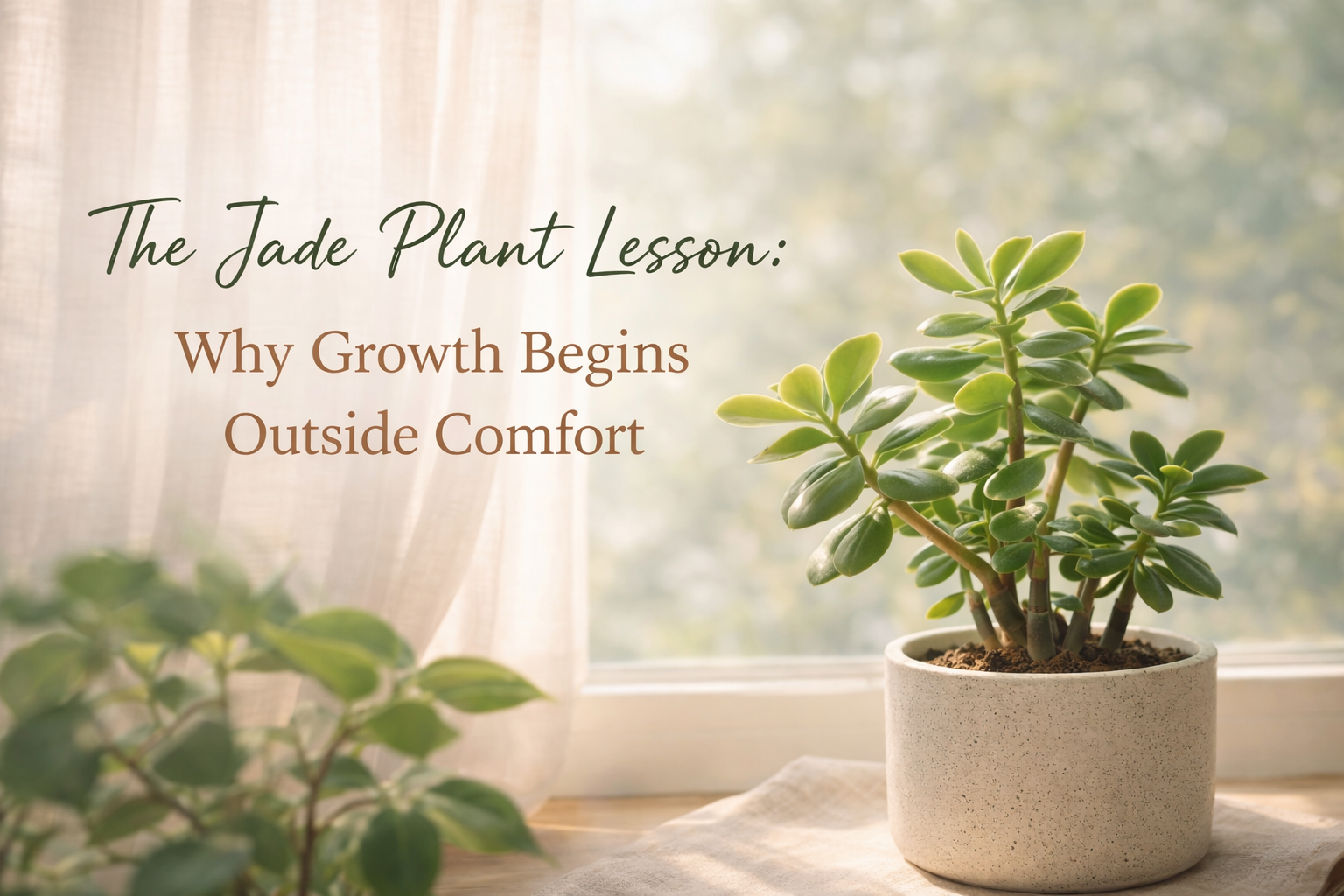
The Jade Plant Lesson: Why Growth Begins When We Step Out of Comfort
The jade plant lesson came to me quietly, without effort. This space, Little Blue Moon, is where I share these quiet lessons life leaves behind. Here is one of those. As a New Year gift, I received a small Jade plant and placed it on my desk, right in front of me, because I loved seeing it there. It seemed full of quiet promise, and it instantly became my favorite thing on my desk. I placed it right in front of me, where I could see it every time I looked up from my screen. There was something calming about its presence — a living, breathing reminder of new beginnings. For the first two days, everything felt perfect. I’d glance at it between tasks, sometimes even talk to it softly as if it could hear me. It was my little green companion, quietly adding life to my space. But then, I noticed something. The leaves weren’t as vibrant. The soil looked dry even though I watered it gently. Something felt off. That’s when it hit me — my room wasn’t the right place for it to grow. There wasn’t enough sunlight, or fresh air. No matter how much love I gave it, it simply couldn’t thrive in that comfort zone of mine. So, a bit reluctantly, I carried it up to the rooftop — a space much less cozy, a little windy, a little harsh. But it had everything the Jade needed: sunlight, air, freedom. A few days later, I went to check on it, and there it was — looking stronger, happier, alive. And I realized — maybe we’re all like that Jade plant. This jade plant lesson stayed with me — a reminder that love sometimes means letting things grow away from us. We love comfort. We stay where things feel safe and familiar — surrounded by what we know, who we know, and what feels easy. But comfort rarely helps us grow. Just like the plant couldn’t bloom in my shaded room, we can’t truly expand when we stay hidden from the light of new experiences. Growth often asks us to move — to step out, to risk the unknown, to face the elements. It’s not always easy, but it’s where we find strength we didn’t know we had. The Jade Plant Lesson and the Meaning of Growth This jade plant lesson reminded me that growth is not about holding on — it’s about choosing what’s right, even when it feels uncomfortable. We often keep ourselves in familiar spaces because they feel safe. But safety alone doesn’t help us bloom. Light does. Space does. Trust does. Sometimes growth asks us to move — quietly, gently, without drama. And when we do, we begin to see ourselves differently. Maybe the real lesson isn’t about plants at all, but about learning when to stay — and when to step into the sunlight.
Little Blue Moon: A Quiet Beginning
This blog wasn’t planned perfectly.The name wasn’t shortlisted or tested or debated too long. Little Blue Moon was simply the first thing that felt right. You know that feeling when you’re shopping and something catches your eye instantly? You don’t question it. You don’t compare it with ten other options. You just know — this is it.That’s exactly how this name came to me. And I remember thinking, screw all the other names, I’m going with this one. It felt like me. I’m just another tiny human being.I’ve always loved the color blue — the calm kind, the deep kind.And the moon… I could stare at it forever without getting tired. So this became Little Blue Moon — a small place, under soft light, where thoughts can exist without rushing. I’ve wanted to start a blog for a long time. The idea stayed with me quietly, waiting. And somehow, January 1 felt right.Not because it’s the start of a new year — but because it feels like the start of a new chapter. 2026 is a special year for me. In April, I’ll be marrying the love of my life, stepping into a completely new journey. And I believe this blog will hold the essence of everything I feel along the way — the excitement, the fear, the love, the uncertainty, and all the in-between moments. This space will grow as I grow. If you’re reading this, I want you to know something — you’re not just reading my thoughts. You’re stepping into my life. Here, I won’t filter emotions into neat categories.I’ll share happiness and sadness.Strength and anxiety.Moments of clarity and moments where everything feels messy. Because that’s life. And pretending otherwise never helped anyone. Some days, this blog might hold random thoughts that crossed my mind unexpectedly.Other days, it might hold deeper reflections — the kind that keep me awake at night, staring at the ceiling, thinking too much. Either way, this will be my life on paper. Honest. Unedited. Real. If Little Blue Moon could whisper one thing to you, it would be this: No matter what situation you’re in — hold on tight.You might fall, and that’s okay. Fall to rest if you must.But not rising back is never an option. Feel every emotion.Live fully.Grow gently.And rise back stronger — every single time. This is the only life we have.Let’s live it honestly. Welcome to Little Blue Moon 🌙

