Productivity culture has quietly changed the way we spend our free time. What used to be simple hobbies, relaxing afternoons and moments of doing absolutely nothing have somehow become opportunities to improve ourselves, learn new skills or achieve something. We track our habits, measure our progress and even feel guilty when we’re not doing something useful. But when did enjoying our free time become another responsibility?
Somewhere between becoming ambitious and trying to make the most of every day, we forgot that we are allowed to do things simply because we enjoy them.
There is something quite interesting about the way we spend our free time these days.
We go for a walk, but somehow it becomes a step-count goal.
We read a book, but before finishing it, we are already thinking about the lessons we can take from it.
We start cooking something new, and a small part of our brain wonders whether it would make a good Instagram reel.
We take a holiday and feel the need to photograph every beautiful corner, almost as if the experience needs to be documented to count.
Even our hobbies seem to have acquired responsibilities.
Reading should make us smarter. Exercising should improve our appearance. Travelling should broaden our perspective. Learning something new should eventually contribute to our careers.
And somewhere in the middle of all this, a rather simple question gets lost.
What happened to doing something just because we liked doing it?
1. Everything seems to need a purpose now
I don’t think there is anything wrong with being ambitious.
Wanting to improve yourself, learn new skills, build a career or become healthier are all wonderful things. Having goals gives direction to our lives.
But I wonder when we started believing that every hour should contribute to some larger version of ourselves.
This is perhaps the most subtle effect of productivity culture. It makes us feel that even our personal time should produce something valuable, as though enjoying an afternoon without accomplishing anything is somehow a missed opportunity.
Think about a simple Sunday afternoon.
You have a few hours to yourself. Instead of enjoying them, you start mentally organising everything you could accomplish.
Perhaps you should finish that online course. Maybe you should finally start exercising. You could work on that side project, read something useful, organise your wardrobe or plan the week ahead.
And if you decide to do none of those things, there is a tiny feeling that you have wasted the afternoon.
Nothing particularly bad has happened. You simply rested.
Yet somehow, resting without having earned it feels uncomfortable.
It is almost as if free time has become another project waiting to be managed.
2. How Productivity Culture Turned Our Hobbies Into Investments
There was a time when a hobby could simply be a hobby.
You could paint terribly and still enjoy painting. You could bake something that looked nothing like the recipe photograph and still have fun making it.
You could learn a language without planning to become fluent, play an instrument without performing for anyone or write something without wondering whether it could become a blog.
Now, the internet constantly reminds us that almost everything can be monetised.
Productivity culture has made it increasingly difficult to separate our interests from our ambitions. We don’t always allow ourselves to enjoy something without wondering whether it could eventually become useful.
Your interest in skincare could become a beauty page. Your love of books could become a book-review account. Your weekend baking could become a small business.
And honestly, there is nothing inherently wrong with that. Turning something you love into a source of income can be incredibly fulfilling.
The problem begins when we stop allowing ourselves to enjoy things that have no commercial value.
Not every interest needs a business plan.
Not every skill needs to become a source of income.
Not every creative thought needs an audience.
Some things can remain ours.
And I think there is something rather beautiful about that.
3. Why Productivity Culture Makes Relaxation Feel Like an Achievement
Have you noticed how often we talk about productivity when discussing self-care?
We track our sleep, monitor our steps, count our water intake, measure our meditation sessions and sometimes even evaluate whether our weekends were sufficiently restorative.
Of course, these things can be useful.
But there is a difference between taking care of yourself and turning your entire life into a performance review.
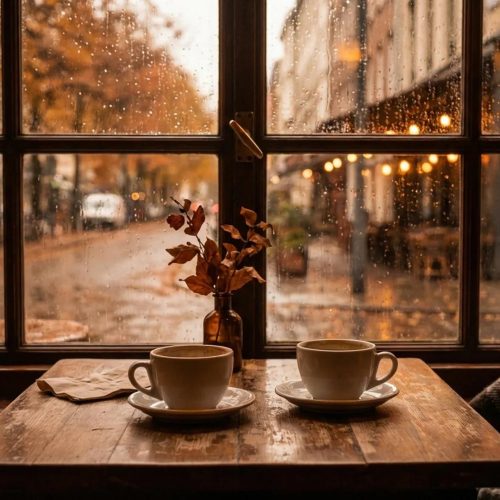
Imagine sitting with a cup of chai and doing absolutely nothing.
No podcast playing in the background. No productivity video. No scrolling through motivational content. No mental checklist of things you should be doing.
Just you, your chai and a few quiet minutes.
Would that feel comfortable?
Or would you instinctively reach for your phone because the silence feels a little too unproductive?
I think many of us have become so accustomed to consuming information that being alone with our own thoughts can feel unfamiliar.
We don’t always know what to do with an empty moment.
So we fill it.
And then we wonder why we feel mentally exhausted despite having spent an entire evening doing things we supposedly enjoy.
There is also research supporting the importance of leisure activities. A review published in The Lancet Psychiatry explored how voluntary, enjoyable activities outside work, including hobbies, sports, arts and socialising, can influence health through psychological, biological and social pathways. It is a useful reminder that leisure has value beyond simply filling our spare time.
4. Social media has made ordinary experiences feel incomplete
There is another layer to this.
We don’t just experience things anymore. We often experience them while thinking about how they might look to someone else.
A beautiful meal becomes a photograph.
A birthday becomes a carousel.
A vacation becomes a collection of carefully selected frames.
Even a quiet morning can turn into an aesthetic routine that needs to be captured.
Again, sharing experiences isn’t the problem. There is something lovely about documenting memories and finding people who enjoy the same things.
But sometimes, I wonder whether we are becoming more concerned with preserving the appearance of a good life than actually being present in one.
Imagine visiting a beautiful place and spending so much time looking for the perfect photograph that you barely notice the view.
Or having dinner with someone you love while repeatedly checking whether the photograph turned out well.
The irony is that we want to remember these experiences so badly that we sometimes forget to experience them.
Not every beautiful moment needs evidence.
Some memories can exist without photographs, captions or anyone else’s approval.
5. The pressure to become a better version of ourselves can become exhausting
Self-improvement is an interesting concept.
At its best, it encourages us to understand ourselves, recognise our limitations and make changes that improve our lives. At its worst, it makes us feel like unfinished projects.
There is a difference between healthy self-improvement and productivity culture that makes us feel permanently behind. One encourages growth; the other can make even our happiest moments feel like something we haven’t done enough with.
There is always another book to read, another skill to learn, another habit to develop, another physical goal to achieve and another version of ourselves waiting to be created.
And because there is no final destination, the list never really ends.
You finish one goal and discover three more.
You improve one area of your life and immediately notice another that needs attention.
Before you know it, you are spending so much time preparing to become the person you want to be that you barely spend any time appreciating the person you already are.
I find this particularly interesting because personal growth is supposed to make our lives richer.
It shouldn’t make us feel perpetually inadequate.
Perhaps becoming a better version of yourself should also include learning when to stop improving and simply enjoy being yourself.
6. Maybe we need a few things in our lives that are completely pointless
And I mean that in the nicest possible way.
Perhaps we need hobbies that don’t make us money.
Books that don’t teach us anything particularly useful.
Walks that don’t contribute to a fitness target.
Conversations that don’t lead to opportunities.
Recipes that we make simply because they sound delicious.
Music that we listen to without analysing the lyrics or turning it into a playlist for productivity.
Maybe we need to spend an afternoon rearranging our room and then deciding we liked it better before.
Maybe we need to watch a silly television show without trying to extract a life lesson from every episode.
There is a kind of freedom in doing something without needing to justify it.
It reminds us that life isn’t just a sequence of goals to complete.
It is also a collection of ordinary moments that are worth enjoying while they are happening.
7. You don’t have to make every moment count
I think this is the part I want to remember.
Not every day needs to be productive.
Not every weekend needs to be memorable.
Not every hobby needs to turn into a skill.
Not every interest needs to become an identity.
And not every version of yourself needs to be better than the previous one.
Sometimes, a good day is simply one where nothing particularly exciting happens.
You wake up, have your morning chai, finish your work, eat something you like, talk to someone you love and go to bed without feeling that you should have accomplished more.
There is no impressive milestone to report.
No big transformation.
No new achievement.
Just an ordinary day that felt nice to live.
And perhaps we have underestimated how valuable those days are.
I don’t want to stop being ambitious. I still think learning, growing and building something meaningful are important parts of life.
But I also don’t want to reach a point where I cannot enjoy a hobby without wondering what it is doing for my future.
I want to read a book and forget to take notes.
I want to go for a walk without checking how many steps I’ve completed.
I want to spend an afternoon doing something terribly unproductive and not feel the need to compensate for it later.
Because perhaps a life well-lived isn’t one in which every minute contributes to something.
Perhaps it is one in which we occasionally allow ourselves to enjoy a minute simply because it exists.
And if that means having a few completely unproductive afternoons, I think we should be okay with that.
After all, we’re human beings, not unfinished to-do lists.
With love,
Little Blue Moon 🌙